
Raised bed gardening gives beginners more control, better yields, and fewer weeds — here’s a complete step-by-step guide to building, filling, and planting your first raised bed.
If you’ve ever struggled with poor soil, stubborn weeds, waterlogged beds, or a back sore from bending over ground-level garden rows — raised bed gardening is the solution you’ve been looking for.
Raised beds give gardeners complete control over their growing environment. You choose the soil. You define the space. You eliminate compaction. And you harvest more food per square foot than almost any other growing method available to home gardeners.
At Outz News Garden, Maria Walker recommends raised beds as the single best starting point for most beginner gardeners. In this complete guide, you’ll learn exactly how to plan, build, fill, and plant your first raised bed — with guidance on size, materials, soil mix, crop selection, and seasonal care. For information on what to grow once your bed is ready, see our vegetable garden for beginners guide.
Why Raised Beds Outperform In-Ground Gardens for Beginners
According to the University of Minnesota Extension, raised bed gardening offers several significant advantages over traditional in-ground growing — making it one of the most beginner-friendly approaches available:
- Earlier planting in spring — raised bed soil warms up significantly faster than ground-level soil, allowing you to plant 2 to 4 weeks earlier than in-ground gardens in the same location
- Better drainage — the elevated profile and loose soil structure mean water drains freely, virtually eliminating the waterlogging and root rot that plague in-ground gardens with poor drainage
- No soil compaction — because you never step inside the bed, soil stays loose and well-aerated. Loose soil grows deeper, healthier roots and requires no tilling year after year
- Complete soil control — you start with a custom soil mix perfectly matched to your crops, bypassing poor native soil, contaminated urban soil, or heavily clay or sandy ground
- Fewer weeds — starting with weed-free soil mix dramatically reduces weed pressure. Any weeds that do appear are easy to pull from loose, well-draining raised bed soil
- Better accessibility — raised beds bring the garden to a more comfortable working height, reducing bending and kneeling. Beds built at counter height are fully accessible for wheelchair users
- More productive per square foot — intensive planting in rich raised bed soil consistently produces higher yields per square foot than row gardening in native soil
Step 1 — Planning Your Raised Bed: Size, Location, and Number
Choosing the Right Size
According to the University of Maryland Extension, raised beds are typically 2 to 4 feet wide, 2 to 12 inches high, and as long as desired. These dimensions are based on a simple but important principle: you should be able to reach the center of the bed from either side without stepping in.
- Width: 4 feet is the standard width — accessible from both sides without stretching. If the bed is placed against a wall or fence where access is only from one side, limit width to 2 feet.
- Length: 4 to 8 feet is ideal for a first bed. 4×4 feet is perfect for absolute beginners; 4×8 feet doubles your growing space without significantly increasing complexity.
- Height: 6 to 12 inches is sufficient for most vegetables when placed on existing soil. 12 inches is ideal and allows the widest range of crops. On hard surfaces like concrete or pavement, use 12–24 inches for deep-rooted crops like tomatoes and squash.
Choosing the Best Location
- Full sun is non-negotiable for vegetables — most crops need 6 to 8 hours of direct sunlight daily. Scout your yard at different times of day to identify the sunniest spot before building.
- Level ground — raised beds on sloped ground are difficult to manage and lose water unevenly. If your yard slopes, consider terracing or building on the flattest available area.
- Close to water — raised beds dry out faster than in-ground gardens and need regular watering. Choose a location within easy reach of a hose bib or outdoor faucet.
- Away from trees — tree roots will eventually invade raised bed soil from below, competing with your vegetables for water and nutrients. Maintain at least 10 feet of distance from large trees.
Step 2 — Choosing Your Raised Bed Materials
Raised bed frames can be built from a wide range of materials. Each has advantages and disadvantages for beginners.
Wood — The Most Popular Choice
Cedar and redwood are the gold standards for wooden raised beds. Both are naturally rot-resistant and can last 10 to 20 years or more without treatment. They are more expensive than other woods but represent an excellent long-term investment.
Douglas fir and pine are much more affordable alternatives. Untreated pine will last 3 to 7 years before rotting, but is a perfectly reasonable choice for a beginner’s first bed — it costs little to replace when it eventually breaks down. Use 2×10 or 2×12 lumber for beds 10–12 inches deep.
Avoid pressure-treated lumber for beds growing food. While modern pressure-treated wood (ACQ-treated) is considered safer than older CCA-treated wood, the University of Maryland Extension recommends testing any soil placed near treated wood if you have concerns.
Metal — Durable and Modern
Galvanized steel and Corten steel raised beds have become increasingly popular. They are extremely durable (20+ years), resistant to rot and pests, and have a clean, modern aesthetic. Metal beds heat up faster than wood in spring but can also overheat in very hot climates — line the inside with cardboard or shade the sides in extreme heat zones.
Concrete Blocks, Bricks, and Stone
Permanent, durable, and very attractive. These materials require more initial effort and cost but last indefinitely. The thermal mass of stone and concrete blocks moderates soil temperature — helpful in climates with temperature extremes.
Fabric Grow Bags and Beds
Large fabric raised bed bags are an excellent low-cost option for beginners, especially in rental situations or where a permanent installation isn’t feasible. They provide excellent drainage and air pruning of roots, fold flat for storage, and can be placed on patios and decks.
Step 3 — Building the Raised Bed Frame
For a standard 4×8 foot wooden raised bed using 2×10 lumber, the process is straightforward enough for a complete beginner with basic tools:
Materials for a 4×8 ft. Raised Bed
- Two 8-foot boards (2×10 or 2×12) for the long sides
- Two 4-foot boards for the short ends
- Four 2×2 or 4×4 corner posts, 12–18 inches long
- Exterior wood screws (3 inch)
- Drill and drill bit
Assembly Steps
- Step 1: Cut lumber to length if needed. Pre-drill screw holes at the ends of each side board to prevent splitting.
- Step 2: Attach the corner posts to the inside corners of the short end boards using 2 screws per connection.
- Step 3: Attach the long side boards to the corner posts, screwing through the side boards into the posts. Check for square by measuring diagonally — both diagonal measurements should be equal.
- Step 4: For beds longer than 4 feet, add a center support stake on each long side to prevent bowing under soil pressure.
- Step 5: Place the frame in its final location before filling with soil — a filled bed is extremely heavy and difficult to move.
Step 4 — The Perfect Raised Bed Soil Mix
The soil mix you choose determines everything about how well your raised bed performs. This is where beginners make the most costly mistakes.
According to Penn State Extension, selecting the correct soil is one of the most important decisions for raised bed gardening success. The ideal mix is loose, well-draining, and rich in organic matter — properties that native garden soil almost never provides without significant amendment.
The Classic Mel’s Mix (Highly Recommended for Beginners)
This widely used formula from square-foot gardening produces excellent results for most vegetable crops:
- 1/3 blended compost (mix of several types if possible)
- 1/3 peat moss or coconut coir
- 1/3 coarse perlite or vermiculite
This mix is light, fluffy, drains well, and retains moisture — everything a raised bed soil needs. It’s weed-free, never compacts, and produces outstanding yields.
The University of Maryland Formula
For gardeners using nearby native soil as a cost-saving base, the University of Maryland Extension recommends mixing compost and garden soil (or purchased topsoil) in a 1:2 or 1:1 ratio. Always have native soil tested for lead and other contaminants before using it in a food garden.
Minimum Soil Depth by Crop
- 8 inches minimum: lettuce, spinach, arugula, radishes, green onions, beans, cucumbers, peas
- 12 inches: beets, carrots, chard, kale, peppers, herbs
- 12–24 inches: tomatoes, squash, eggplant, potatoes, corn — deep-rooted crops that benefit from maximum soil depth
Step 5 — Planting Your Raised Bed
One of the great advantages of raised beds is that they support intensive planting — plants are spaced much more closely than in row gardens, maximizing yield per square foot while using foliage to shade out weeds.
Intensive Spacing Guide
Instead of long rows with wide spaces between them, plant in a grid pattern based on the final size of each plant:
- Every 3 inches: radishes, carrots, beets
- Every 4–6 inches: lettuce, spinach, green onions
- Every 8–12 inches: basil, bush beans, kale, chard
- Every 18–24 inches: peppers, cucumbers, broccoli
- Every 24–36 inches: tomatoes, squash, eggplant
Succession Planting for Continuous Harvest
Rather than planting an entire bed at once and harvesting it all in a short window, practice succession planting — sow small amounts of fast-growing crops (lettuce, radishes, green onions) every 2 to 3 weeks throughout the season. This provides a steady supply of fresh greens from spring through fall rather than a single large harvest.
Companion Planting in Raised Beds
Raised beds are ideal for companion planting — the practice of growing mutually beneficial plants near each other. Classic combinations include:
- Tomatoes + basil — basil deters aphids and tomato hornworms
- Three Sisters (corn + beans + squash) — a Native American companion planting tradition: corn provides a climbing pole for beans; beans fix nitrogen; squash shades the soil, reducing weeds and moisture loss
- Any vegetable + marigolds — marigolds repel aphids, nematodes, and whiteflies throughout the bed
For more on growing organically within your raised beds, see our organic gardening tips guide.
Maintaining Your Raised Bed Through the Seasons
Watering
Raised beds drain more freely than in-ground gardens and need more frequent watering — especially in hot summer weather. Check soil moisture at 2 inches depth every day during the growing season. A soaker hose or drip irrigation system laid along the bed surface is the most efficient watering solution. For complete watering guidance, see our plant watering guide.
Replenishing Organic Matter
Raised bed soil settles and loses volume each season as organic matter breaks down. Top up the bed each spring with 1 to 2 inches of finished compost. Over time, this practice continuously improves soil structure and fertility — the raised bed becomes more productive every year, not less. See our composting guide to make your own free compost at home.
Crop Rotation in Raised Beds
Even in small raised beds, crop rotation matters. Never plant the same vegetable family in the same bed two years in a row. If you have multiple beds, rotate tomatoes, peppers, and eggplant (nightshades) to a different bed each season. This breaks pest and disease cycles naturally, one of the most effective tools in organic gardening.
Quick-Reference: Top Raised Bed Gardening Tips
- Start with one 4×4 or 4×8 bed — resist the urge to build five beds your first season. Master one bed before expanding.
- Invest in quality soil mix — soil is the single most important component. Good soil in a simple bed outperforms bad soil in an expensive bed every time.
- Never step inside the bed — keeping soil loose and uncompacted is the core advantage of raised beds. Use kneeling boards placed across the frame edges if you need to reach the center.
- Add compost every spring — 1 to 2 inches of compost each year maintains and improves fertility without synthetic fertilizers
- Plant intensively — close plant spacing maximizes yield, shades out weeds, and makes the most of expensive raised bed soil
- Mulch between plants — a thin layer of straw or shredded leaves between plants conserves moisture and suppresses the few weeds that do germinate
Raised bed gardening removes the most common barriers that discourage beginner gardeners — poor soil, compaction, weeds, bad drainage, and back pain. By starting with one well-built, well-filled bed in a sunny spot, you create a productive growing space that will reward you with fresh vegetables, herbs, and flowers for years to come.
The investment of building a raised bed in your first season pays dividends for a decade or more. The soil improves with every application of compost. The bed becomes more productive as you learn your crops and refine your planting timing. And the satisfaction of harvesting food you grew yourself, in soil you built yourself, never gets old.
Ready to get started? Share your raised bed plans or questions in the comments below — and explore our full collection of beginner gardening guides right here at Outz News Garden!
👉 Read Next: Vegetable Garden for Beginners — Complete Step-by-Step Guide
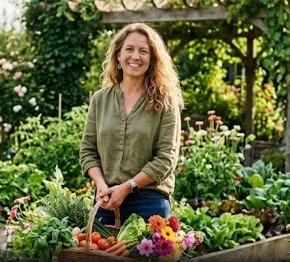
Maria Walker is a certified horticulturist and gardening specialist with over 15 years of hands-on experience in plant care, garden design, and sustainable growing practices.
She holds a Bachelor’s degree in Horticulture Science and a Master’s degree in Sustainable Agriculture — and has spent her career helping people of all skill levels create beautiful, thriving gardens.
Maria launched Outz News Garden with one simple mission: to make gardening accessible and inspiring for everyone, from first-time planters to seasoned green thumbs.