
Learn how to fertilize plants correctly — understand the N-P-K label, choose the right fertilizer for each plant type, and feed your garden at exactly the right time.
Walk into any garden center and you’ll find an entire aisle of fertilizers — granules, liquids, spikes, slow-release pellets, organic meals, synthetic blends. For a beginner, it can feel impossible to know where to start.
The good news is that fertilizing plants doesn’t have to be complicated. Once you understand a few core principles — what plants actually need, how to read a fertilizer label, and when to feed versus when to hold back — you’ll have the knowledge to fertilize any plant in your garden with confidence.
At Outz News Garden, Maria Walker breaks fertilizing down into simple, practical steps for gardeners at every level. This complete guide covers everything from understanding soil nutrients and reading N-P-K labels to fertilizing vegetables, flowers, containers, and trees — with specific guidance for each. For the foundation of healthy plants before any fertilizer is applied, start with our guide on organic gardening and soil health.
Why Plants Need Fertilizer — And When They Don’t
Plants growing in undisturbed natural ecosystems — forests, meadows, prairies — never receive fertilizer. They get everything they need from air, water, decaying organic matter, and the living ecosystem in the soil.
According to the University of Maryland Extension, our home gardens are fundamentally different from wild areas: soils around homes are often heavily disturbed, with topsoil removed during construction, organic matter depleted, and the natural nutrient recycling cycle broken. In these conditions, adding fertilizer helps supply the mineral nutrients that are in short supply — but only when the soil genuinely needs them.
This is the critical point most beginners miss: fertilizer is not plant food in the way most people think. Plants make their own food through photosynthesis. Fertilizer supplies mineral nutrients — raw materials the plant uses to build leaves, roots, flowers, and fruit. Applied correctly, fertilizer dramatically improves plant performance. Applied incorrectly — too much, at the wrong time, without a soil test — it wastes money, damages plants, and pollutes waterways.
The 17 Essential Plant Nutrients — And the Big Three
According to the University of Minnesota Extension, plants require 17 essential nutrients for healthy growth. Carbon, hydrogen, and oxygen — the three most needed — come directly from air and water and never need to be added as fertilizer. The remaining 14 come from the soil.
Of these, three are needed in significantly larger amounts than the rest. These are the primary macronutrients — the ones you see represented by the three numbers on every fertilizer label:
Nitrogen (N) — The Growth Driver
Nitrogen fuels leafy, green, vegetative growth. It’s a core component of chlorophyll (the molecule that makes leaves green) and amino acids (the building blocks of protein). Plants deficient in nitrogen show distinctive yellowing of older, lower leaves first — the plant pulls nitrogen from older tissue to support new growth.
When plants need more nitrogen: during periods of rapid vegetative growth — early spring for lawns and perennials, the first weeks after transplanting for vegetables, and throughout the season for leafy crops like lettuce, spinach, and kale.
When to hold back nitrogen: when plants are transitioning from vegetative growth to flowering and fruiting. Excess nitrogen at this stage produces lush, leafy plants that are slow to set fruit — a very common problem with tomatoes and peppers.
Phosphorus (P) — The Root and Flower Builder
Phosphorus supports strong root development, flowering, seed production, and energy transfer within the plant. It’s especially critical during germination, establishment, and fruit development. Phosphorus deficiency shows as reddish-purple discoloration on leaf undersides and stems.
Important note: University of Minnesota Extension research shows that many soils — especially in established gardens — already have adequate or excess phosphorus. Applying phosphorus fertilizer to a soil that doesn’t need it wastes money and contributes to water pollution. Always base phosphorus applications on soil test results.
Potassium (K) — The Plant Strengthener
Potassium regulates water movement within the plant, strengthens cell walls, improves disease resistance, and supports fruit quality and flavor. Plants deficient in potassium show brown, scorched leaf edges — a symptom called leaf scorch or potassium burn — starting on older leaves.
How to Read a Fertilizer Label: The N-P-K Numbers
Every fertilizer sold in the United States displays three numbers on the label — always in the order Nitrogen-Phosphorus-Potassium. These numbers represent the percentage of each nutrient by weight in the product.
Common N-P-K Formulas and When to Use Each
- 10-10-10 (Balanced / All-Purpose) — equal amounts of all three macronutrients. Best for new gardens, soil preparation, and crops with no specific nutritional requirements. A good default when you don’t have soil test data.
- 21-0-0 (High Nitrogen) — used primarily for lawns and leafy greens needing a nitrogen boost. Never use on fruiting plants in flower — it will delay fruit set significantly.
- 5-10-10 or 3-15-12 (Bloom/Fruit Fertilizer) — low nitrogen, higher phosphorus and potassium. Ideal for tomatoes, peppers, roses, and other flowering and fruiting plants once flowers begin to form.
- 0-20-20 (Phosphorus-Potassium Only) — used when nitrogen is already adequate and only P and K are needed based on soil test results.
- Organic fertilizers (e.g., 5-3-4, 4-1-2) — generally lower in total nutrient content than synthetic fertilizers but release nutrients slowly as soil microbes break them down, feeding plants over weeks and months rather than days.
Organic vs. Synthetic Fertilizers: What’s the Difference?
This is one of the most common questions beginner gardeners ask — and the answer depends on your goals, budget, and gardening philosophy.
Synthetic Fertilizers
Manufactured from mineral or chemical sources. Key characteristics:
- Fast-acting — nutrients are immediately available to plants
- Precise and predictable — exact nutrient ratios are guaranteed on the label
- Higher risk of over-application — too much synthetic fertilizer burns plants and leaches into groundwater
- Don’t build soil biology — synthetic fertilizers feed plants but don’t improve long-term soil health
- Best for: correcting specific deficiencies quickly, or when fast results are needed
Organic Fertilizers
Derived from natural plant, animal, or mineral sources — compost, fish emulsion, blood meal, bone meal, kelp meal, worm castings. Key characteristics:
- Slow-release — nutrients are released as soil microbes break down organic matter, providing a steady, gentle feed over weeks and months
- Builds soil health — organic fertilizers feed both the plant and the soil biology simultaneously
- Very difficult to over-apply — the slow-release mechanism prevents the sudden nutrient surges that burn plants
- Variable nutrient content — organic sources are less precise than synthetic ones, making soil testing more important
- Best for: long-term soil health, organic gardens, and gardeners who want to reduce synthetic chemical use
The ideal approach for most home gardeners combines both: organic matter and compost as the foundation, with targeted synthetic or concentrated organic fertilizers to address specific deficiencies identified by soil testing.
Step 1 — Always Start with a Soil Test
The most important step in any fertilizing program — and the one most beginners skip — is a soil test. Without knowing what’s already in your soil, you’re essentially fertilizing blind.
A basic soil test from your state’s Cooperative Extension laboratory or a private lab measures soil pH, organic matter content, phosphorus, potassium, and often calcium and magnesium. It comes with recommendations for how much of each nutrient to add based on your specific soil and your intended crops.
Soil tests cost $15–$30 at most Extension labs and are available through your local Cooperative Extension office. They’re worth every penny — they prevent the over-application of nutrients your soil doesn’t need and identify deficiencies that explain why your plants have been struggling. Test every 2 to 3 years for established gardens, and always test before starting a new bed.
How to Fertilize Vegetables Step by Step
According to the University of Maryland Extension, vegetable crops generally need nutrients most when they are getting established and during flowering and fruiting — and fertilizer needs decrease significantly as soil organic matter content increases over time.
The Three-Stage Vegetable Fertilizing Program
- Stage 1 — Soil preparation (before planting): incorporate 2–4 inches of finished compost into the top 8–12 inches of soil. If a soil test recommends additional phosphorus and potassium, apply a balanced granular fertilizer (10-10-10) and work it into the soil.
- Stage 2 — Side-dressing (mid-season): once plants are actively growing and beginning to flower, apply a side-dressing of fertilizer by sprinkling granules in a band 4–6 inches from the base of plants and watering in. For heavy feeders like tomatoes, corn, and squash, this mid-season feeding significantly boosts yield.
- Stage 3 — Foliar feeding (optional, for fast results): diluted liquid fertilizers applied directly to leaves are absorbed quickly and provide fast correction of deficiencies. Fish emulsion or liquid kelp are popular organic options. Always apply in the morning and rinse foliage with clean water after application.
Crop-Specific Nitrogen Needs
- High nitrogen needs: corn, leafy greens (lettuce, spinach, kale, chard), broccoli, cabbage — these crops grow large amounts of leaf tissue and need regular nitrogen throughout the season
- Moderate nitrogen needs: tomatoes, peppers, cucumbers, squash — reduce nitrogen once flowering begins to avoid lush growth at the expense of fruit
- Low nitrogen needs: beans, peas — legumes fix their own nitrogen from the air through root nodules. Adding nitrogen fertilizer to beans and peas is rarely needed and often counterproductive.
How to Fertilize Container Plants
Container plants need more frequent fertilizing than in-ground gardens. Every time you water a container, nutrients leach out through the drainage holes — meaning the potting mix is depleted much faster than garden soil.
The University of Minnesota Extension recommends beginning regular fertilizer applications 2 to 6 weeks after planting a container, depending on the potting mix, watering frequency, and growth rate. Key principles for container fertilizing:
- Use water-soluble fertilizer — liquid or soluble granule fertilizers are the most effective for containers. They deliver nutrients directly to the root zone and allow precise control of application rates.
- Fertilize lightly and frequently — rather than applying full-strength fertilizer every 2 weeks, consider half-strength every week. This maintains steady nutrition without the risk of fertilizer salt buildup.
- Match fertilizer to growth stage — use higher-nitrogen fertilizers for leafy growth in spring; switch to bloom-boosting (higher phosphorus and potassium) formulas once flowers appear.
- Never exceed label recommendations — over-fertilizing containers is easy and causes leaf burn, root damage, and salt accumulation in the potting mix.
- Flush containers monthly — water deeply until water pours freely from drainage holes to flush accumulated fertilizer salts that can build up and damage roots over time.
For more on container growing success, see our complete container gardening guide.
Common Fertilizing Mistakes to Avoid
- Fertilizing without a soil test — adding nutrients your soil doesn’t need wastes money and can create nutrient imbalances that harm plant health
- Over-fertilizing with nitrogen — the most common beginner mistake. Excess nitrogen produces lush, dark green growth that looks healthy but is actually more vulnerable to pests, disease, and drought stress
- Applying fertilizer to dry soil — always water the garden before and after applying granular fertilizer. Fertilizer applied to dry soil can burn roots and is not absorbed effectively
- Fertilizing in hot weather — avoid fertilizing during heat waves or drought stress. Stressed plants cannot use nutrients effectively and fertilizer salts can damage already-stressed roots
- Fertilizing dormant plants — plants in winter dormancy cannot use nutrients. Fertilizer applied in late fall leaches into groundwater before spring growth begins
- Ignoring pH — soil pH controls nutrient availability more than fertilizer quantity. Even a well-fertilized garden will produce poor results if pH is too high or low. Most vegetables perform best at pH 6.0–7.0.
Quick-Reference Fertilizing Guide by Plant Type
- Vegetables: balanced fertilizer at planting; switch to low-nitrogen bloom formula at first flower; heavy feeders like tomatoes benefit from monthly side-dressing throughout the season
- Annual flowers: balanced fertilizer at planting; bloom-boosting formula every 2–3 weeks through flowering season; deadhead regularly to keep plants focused on bloom production
- Perennial flowers: light application of balanced slow-release fertilizer in early spring as new growth emerges; established perennials in compost-rich soil often need little or no supplemental fertilizer
- Container plants: water-soluble fertilizer every 1–2 weeks during the growing season; reduce to monthly in fall; stop entirely during winter dormancy
- Raised beds: top-dress with 1–2 inches of compost each spring; supplement with balanced fertilizer if plants show deficiency symptoms; test soil every 2–3 years
- Trees and shrubs: most established trees and shrubs need little supplemental fertilizer. Apply a slow-release balanced fertilizer in early spring only if growth is noticeably slow or foliage is pale
Learning how to fertilize plants correctly is one of the most empowering skills in all of gardening. When you understand what the three numbers on a fertilizer label mean, how to match fertilizer type to plant growth stage, and why a soil test is always the right starting point, you stop guessing and start growing with genuine confidence.
The most important thing to remember is that more fertilizer is almost never better. Healthy soil rich in organic matter is always the goal — and as your compost additions build organic matter over the seasons, your garden’s need for supplemental fertilizer will gradually decrease, not increase. Feed the soil, and the soil will feed your plants.
Have questions about a specific plant that’s struggling or showing nutrient deficiency symptoms? Drop a comment below and Maria will help you diagnose it. And for more on building long-term soil health naturally, visit our guide to making compost at home.
👉 Read Next: Raised Bed Gardening — The Complete Beginner’s Guide
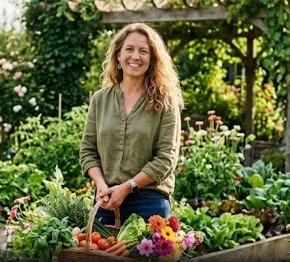
Maria Walker is a certified horticulturist and gardening specialist with over 15 years of hands-on experience in plant care, garden design, and sustainable growing practices.
She holds a Bachelor’s degree in Horticulture Science and a Master’s degree in Sustainable Agriculture — and has spent her career helping people of all skill levels create beautiful, thriving gardens.
Maria launched Outz News Garden with one simple mission: to make gardening accessible and inspiring for everyone, from first-time planters to seasoned green thumbs.